
Qedma at Q2B 2025 Tokyo – Netanel Linder (Qedma) and Seiji Yunoki (RIKEN) on Quantum-Enhanced HPC Simulations with Error Mitigation

In this presentation from the Q2B Tokyo conference, Prof. Netanel Lindner explores how combining error-mitigated quantum computing with High-Performance Computing (HPC) can accelerate the path to practical quantum advantage. He presents Qedma’s QESEM software, which enables hardware-agnostic, unbiased error mitigation, significantly extending the scale and reliability of executable quantum circuits.

In collaboration with RIKEN, a hybrid quantum-classical approach leveraging tensor network methods demonstrates substantial efficiency gains, dramatically reducing computational time for complex simulations. These results highlight how integrating quantum and classical resources can unlock meaningful quantum advantage well before the arrival of fully fault-tolerant quantum computing.
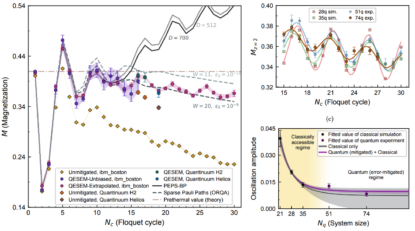
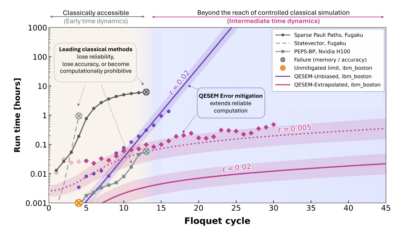
[0:00] [Music] [0:05] Hello everyone. Uh thank you for [0:06] attending. So it’s a great pleasure uh [0:09] to give this talk together with my great [0:11] collaborator uh Yukisan from Ricken and [0:15] we’ll be talking about how to enhance [0:17] HPC simulations using error mitigated [0:20] quantum computers. So let me first begin [0:22] by introducing the problem. The main [0:24] problem with quantum computing at this [0:26] time is the issue of errors and noise in [0:28] quantum computers. We all know that [0:31] noise severely limits the size of [0:33] quantum computations that we can do with [0:35] quantum computers. Um and we this [0:38] problem can be remedied in two different [0:40] ways. One of them is to use a large [0:42] number of extra cubits in order to use [0:44] error correction. These cubits also have [0:45] to be of very high fidelity in order for [0:48] this to be useful. current devices uh [0:51] are don’t have the numbers for making [0:53] error correction uh still kind of use [0:55] useful uh in a practical sense uh and [0:58] the other way uh other resources you [1:00] could use is to use extra QPU time and [1:03] use methods undergoing the name of error [1:04] mitigation um and here the QPU time [1:07] could be large it’s important to use a [1:09] method that is very efficient this is [1:10] what we’re focusing at at KDMA we’ve [1:12] developed a software called Kessum which [1:14] I’ll introduce uh which does this very [1:16] efficiently um and and this uh type of [1:19] methods do not need x any extra number [1:21] uh cubit overhead. Furthermore, uh error [1:25] mitigation can be combined together with [1:28] error correction to give a significant [1:30] extra boost over air correction and can [1:33] also be combined together with HPCs in [1:35] order to boost performance and this is [1:37] going to be the focus on this [1:39] talk. So let me discuss uh the [1:43] possibility of obtaining a quantum [1:45] advantage with error mitigation. So the [1:48] time for performing error mitigation [1:50] scales mildly exponentially [1:53] uh with the uh circuit volume times the [1:57] error rate. Now this exponential scaling [1:59] means that there could not be an [2:00] exponential quantum advantage but there [2:01] could be a polomial advantage of a very [2:04] high degree uh for quantum computing [2:07] versus classical computing. Uh and this [2:09] polomial could be uh of a degree of one [2:12] over the error rate which is very large. [2:14] It could be in the order of a thousand. [2:16] So this very large polomial advantage [2:19] can lead to dramatic qu finite quantum [2:22] advantages. These are the practical [2:23] quantum advantages we’re interested [2:26] in. Um so you know in order to enjoy [2:30] quantum advantage uh using error [2:32] mitigation it’s of course important to [2:34] use an method which is efficient in [2:36] order to reach the largest uh circuit [2:38] volumes possible. But it’s also [2:40] important to use a method which is [2:41] unbiased since in the regime of quantum [2:44] advantage you cannot verify your results [2:45] anymore against classical simulations. [2:48] In fact, using the devices that are [2:50] available today, I’ll show you that [2:52] we’re very close to achieving quantum [2:54] advantage for executing circuits and uh [2:57] with you know next generation of devices [2:59] we’re going to be in the quantum [3:01] advantage regime and furthermore using [3:03] the combination with HPCs our work with [3:06] we can show we can really accelerate the [3:08] timeline for achieving uh quantum [3:10] advantage um already [3:13] today. So let me introduce KSM. Kessm [3:16] stands for quantum error suppression and [3:18] error mitigation. In Hebrew, Kessm mean [3:21] magics. Um it is a few things I want you [3:25] to keep in mind about uh KSM. One of [3:27] them is that it’s based on an unbiased [3:29] method. Meaning that when you execute [3:31] the algorithm, you’re getting results [3:34] from a noise-free quantum computer. The [3:36] only remaining uh sources of noise are [3:39] statistical. This is an inherent part of [3:41] quantum mechanics and could be reduced [3:43] just by running for a longer time. The [3:46] method works for any quantum algorithm. [3:47] We refer to it as being algorithm [3:49] agnostics. It also uh works for a [3:52] variety of different quantum hardares [3:54] and we’ve tested it also uh extensively. [3:57] It also has a very flexible deployment [3:59] that could be used either through our [4:01] cloud, it could be installed on premises [4:03] or could be used through a kitkit [4:05] function uh that we deploy. So let me [4:08] give you a bird’s eye view of how the [4:10] software works. The end user sends our [4:13] system the circuit he wants to run, the [4:16] uh level of access he want to get and uh [4:19] the specific device he wants to run on. [4:22] Then based on this information at the [4:24] time of execution we run a job for [4:26] characterizing in a very precise way the [4:29] noise sources in the device. uh based on [4:32] this we optimize gates we transpile the [4:34] circuit and we compile the circuit uh to [4:37] an ensemble quantum circuits which we [4:39] then execute on the device and by [4:41] classical post-processing we return [4:43] noise free results to the user [4:46] um to quantify the benefits of KM it’s [4:49] it’s important to look at a quantity we [4:50] call the circuit volume boost this is [4:52] the ratio between the largest volume you [4:55] can reach with KSM over the largest [4:57] volume you can reach just by running on [5:00] the device with no error mitigation for [5:02] a given accuracy and this boost for high [5:06] accuracies could become very very large [5:07] on the order of a thousand. Uh again [5:10] this means that you can run a circuit [5:11] that is a thousand times larger than [5:13] what you could do otherwise. Um you can [5:16] also compare KSM to other competing [5:18] method that are unbiased like pro [5:20] ballistic error cancellation and you can [5:22] see that KM runs exponentially faster [5:25] giving you access to uh circuit volumes [5:28] which are significantly larger. [5:31] Um before I’ll show you some results I [5:33] want to uh introduce a quantity which is [5:35] important in order to quantify [5:36] performance and this quantity is called [5:39] the active volume. The active volume for [5:41] a given circuit and observable you want [5:43] to compute counts the number of two [5:45] cubic gates that are affecting that [5:47] observable and this import this quantity [5:50] quantifies all the complexity for [5:52] performing error mitigation since you [5:54] only need to error mitigate gates within [5:57] the active volume. It also quantifies [5:59] how hard it is to do a classical [6:00] simulation. Since you only need to [6:02] simulate the gates within this active [6:04] volume and you know the shape and the [6:07] size of this active volume strongly [6:09] depends on the parameters of the [6:11] circuit. Here we are plotting it uh for [6:13] a family of circuits called the Toronto [6:15] kicked icing model which we’ll be using [6:18] uh in the next slides. So here’s a [6:21] recent result from a herm device. Uh [6:23] here we used 130 cubits uh on IBM [6:27] Marrakesh. Uh we ran this protoerizing [6:30] circuits for uh 13 protoer time steps. [6:33] Uh this is a large circuit. It’s over [6:35] 30,000 uh CZ gates. Uh it is of depth of [6:39] 78. Um and we computed uh you know [6:43] different observables here uh from [6:46] single point correlations to four point [6:48] correlations. We compare them here to [6:50] the ideal results plotted in gray. Um [6:53] the red points are the results you get [6:56] by running on the device with no error [6:58] mitigation. You can see that there is [6:59] very big systematic errors and the blue [7:02] markers are the results we get with [7:04] Kessm which agree very well with the uh [7:07] correct results. On the right you can [7:09] also see how the uh active volume or the [7:12] lite cone evolves uh with the number of [7:14] time steps and you see that eventually [7:16] at at 13 time steps it covers almost the [7:19] full [7:20] device. Um here are some uh uh problems [7:24] we worked on with our uh collaborators [7:27] and partners. Uh this is a group [7:29] focusing on on high energy. Um and they [7:32] used KSM to study uh couplings uh in a [7:36] one U1 lattice gaze theory in two plus [7:38] one dimension. They used the VQE [7:40] approach uh and used Kessm for for [7:43] executing the circuits. Um they also [7:45] used uh KSM uh for a fluid dynamics [7:48] problem in which they measured the [7:50] moments of the velocity field. The [7:52] quantum chemistry group at the [7:54] University of Southern Denmark uh used [7:56] Kessm for performing VQE for the ground [7:59] set of the H2O molecule. Uh and the [8:02] group of softbank used in the QML [8:05] algorithm uh in which uh they computed a [8:08] kernel matrix using KSM and you can see [8:11] here the results. Uh you can see the uh [8:14] comparison between the ideal uh kernel [8:16] matrix uh the kernel matrix you could [8:19] get when you run on the device with no [8:21] error mitigation on the left and you can [8:22] see that there are very big systematic [8:24] errors and you can see on the right the [8:26] results for the kernel matrix you get [8:28] with Kessm which agree very well uh with [8:30] the ideal [8:31] result. So um let me discuss the road [8:35] map for achieving quantum advantage with [8:37] KSM. uh in this plot you can see the [8:40] runtime of KM as a function of the [8:42] active volume for different values of [8:45] the uh fidelity. You can also see how [8:48] HPC state vector simulation scale um as [8:51] a function of this active volume and you [8:54] can see that with fidelities of 99.8% 8% [8:57] uh you can already be in the quantum [8:59] advantage regime for kind of generic [9:01] circuits and you can also see that the [9:04] uh you know the issue of the question of [9:06] when do you cross in the quantum [9:07] advantage regime also depends on the [9:09] geometry of the specific uh active [9:12] volume that you’re looking at. So I want [9:15] now to turn over the stage to Yukian uh [9:18] who told us about really great [9:20] collaboration uh in which we showed that [9:22] the combination of custom together with [9:23] HPCs uh can enhance classical [9:27] simulations already today. [9:35] Okay. Okay. Thank you. Uh so let’s wait. [9:42] Oh, maybe I have to. Okay, at le our [9:46] team is mainly focusing on uh classical [9:49] computations particularly uh tensor [9:51] network based method. uh as a quick [9:54] reminder uh NPO and NO related [9:57] approaches are very powerful classical [10:00] approach to compress data classical [10:05] informations and let’s let’s just assume [10:07] that we have a operator or acting on n [10:12] cqits and in order to represent this [10:14] operator we generally need a four to n [10:18] uh parameters and therefore it usually [10:21] cost you like exponential potentially [10:23] large amount of computational time with [10:26] increasing the number of cubits n uh if [10:30] you want to treat uh this uh uh operator [10:33] numerically [10:34] exactly. However, uh uh the MPO and NPO [10:39] related approach uh provide you uh [10:43] compress uh representation of operator [10:46] or as a product of uh matrices with bond [10:50] dimension kai and the computational cost [10:54] uh for this approach scales uh as the [10:58] kai cube and therefore this is more [11:01] convenient than the numerically exact [11:04] approach and this method is widely used [11:06] in various research fields including uh [11:10] physics, quantum chemistry and and [11:12] machine learning. And in this talk uh [11:16] we’d like to propose our new approach [11:19] which we would like to call a quant [11:21] enhanced MPO computations. And the key [11:24] idea here is to apply simply a cont onto [11:29] a MPO [11:31] uh and measure the expectation value of [11:34] the the resulting the the operator using [11:38] quantum computer with error mitigation. [11:42] So as a use case uh uh use case example [11:47] uh we consider quantum dynamics that is [11:52] uh split between quant and classical [11:56] computations. More precisely uh we uh uh [12:01] uh divide the total evolution steps uh [12:05] large t uh into uh two segments. The [12:09] first part first segment is performed on [12:12] a class and on a quantum computer while [12:15] the second segment is handled uh using a [12:19] classical computers by uh back [12:22] propagating the operator or for a time [12:26] steps tab uh using [12:29] MO. And this approach allows you uh to [12:34] uh to to to evaluate the expectation [12:37] value of the operator or of [12:41] tow over a time evolved state outside of [12:45] small t uh by running the first part of [12:49] the time steps using quantum computer. [12:53] So to demonstrate our approach here we [12:56] consider a one-dimensional kickizing [12:59] model on 75 cubits [13:03] uh with this particular parameters [13:06] uh where uh you can find discretion [13:09] crystal and we measure a magnetization m [13:13] over the entire uh [13:16] cubits and for all the experiments uh we [13:19] used IBM two systems. [13:23] uh uh and we set the classical uh [13:27] evolution time to uh uh equal 10 [13:32] steps. And without error mitigations, [13:36] the estimated magnetization [13:39] uh [13:41] uh here [13:44] represented by red stock here [13:48] uh deviate significantly from the ideal [13:50] values shown in the gray. [13:54] However, after applying the testing for [13:57] the error mitigation, the results shown [14:00] in blue [14:02] uh agrees quantitatively [14:06] uh uh uh wi with the ideal value or [14:10] within the statistical accur statistical [14:13] error bars. [14:17] More importantly that the time required [14:20] to obtain this error mitigated uh uh uh [14:25] uh magnetization is [14:28] uh is only 8 minutes here [14:32] uh for the total time steps [14:34] 15 with uh classical time step 10 10 [14:38] time steps. [14:40] Uh in contrast, if you use uh quantum [14:43] computers alone [14:46] uh to achieve the same statistical [14:48] accuracy, [14:50] uh the estimated uh the the required QPU [14:54] time would be uh increased up to like [14:59] 240 [15:00] minutes. And the benefit of our approach [15:04] becomes more pronounced for a longer [15:06] time steps such as 25 time steps where [15:12] the required QP time reduces from 17,000 [15:16] minutes to 120 [15:19] minutes if we use our approach. [15:26] So uh using a very simple math with uh [15:29] some reasonable assumption uh one can [15:33] estimate a QPU time required [15:36] uh uh scales uh according to the [15:40] expression shown there up there. there [15:43] uh uh kai in is the bond dimension of [15:48] the mo that is calculated using [15:52] classical [15:53] computers and if is the infidelity of [15:57] the quantum computers employed in your [16:00] experiments and small t uh is the the [16:05] portion of the uh quantum portion of the [16:08] time steps [16:10] uh that that that that you do in a [16:12] quantum [16:14] computer. Uh indeed our experiments [16:17] shown in the previous viewraph [16:20] uh scales very nicely [16:23] uh according to this scaling uh form [16:26] indicated by this straight lines [16:29] here. Since the classical runtime [16:32] required to extend [16:35] uh the evolution by another uh time step [16:39] small t scales exponentially. Uh there [16:42] is a very uh strong uh potential [16:46] to realize quant advantage provided that [16:50] the infidelity of the quant computers uh [16:53] is sufficiently small. [16:58] So finally uh let me give you uh uh the [17:03] concrete example uh by estimating the [17:07] actual runtime. Let’s just assume that [17:10] we have a MO with bond dimension [17:14] 10,000 which is given in this estimate. [17:19] So extending the evolution for another [17:22] five time steps [17:25] uh [17:26] would would require approximately 276 [17:31] hours if you use one of the NVIDIA [17:36] system. In contrast [17:39] uh uh the the required time the QPU time [17:43] in our approach is just 30 minutes. [17:47] Note that here also we have additional [17:49] classical time 17 hours to decompose the [17:53] the mo with bond dimension [17:57] 1000 and the advantage of approach uh [18:00] becomes more clear uh for uh when the [18:04] time step is extended to like 10 steps [18:08] over there [18:10] here the required I if you use a quant I [18:14] mean classical approach [18:16] it it it requires like more than 3,000 [18:20] hours whereas our [18:22] approach can still complete in just [18:26] three [18:27] hours and then even more interesting uh [18:30] if the content computer reaches like a [18:33] fidelity of [18:36] 99.9% the uh the required QPU time uh to [18:41] simulate up to like a 50 time step is [18:44] only 3 [18:48] hours. So these estimates strongly [18:51] suggest that the content advantage may [18:54] be achievable uh much sooner than uh [18:57] previously expected [18:59] uh well before the full FTPC [19:01] era. So please stay tuned because more [19:06] interestingly that are coming soon. [19:08] Thank you. [19:15] Thank you very much. I think we have a a [19:17] question for Netanau, I believe. Um it’s [19:20] in Japanese, but I’ll um translate it. [19:22] Um so um it’s a two-part question. Is uh [19:27] Kessum a solution that is deployed on [19:30] software and second part is is it um [19:34] reliant or upon IBM hardware. Thank you. [19:38] Yeah. So KM is a software solution. uh [19:40] you know it could be accessed through [19:42] our own cloud. It’s also integrated as [19:44] in the Kiskit function in IBM but it is [19:47] not uh you know specific for IBM [19:49] hardware. Uh we’ve tested it on uh [19:52] variety of different hardwarees uh [19:54] including IMQ and uh and IQM and other [19:57] hardware. So you know it it could be [20:00] used on any hardware uh and it needs [20:03] just some adaptation in terms of the [20:05] characterization part of the software. [20:07] Okay. Thank you very much. Thank you [20:10] again both to Yoan and Netanel. [20:16] [Music]

Interested in what we do?

More To Explore